
Use this 26 minute timer to break a cognitive slump and reset your focus with a NASA-backed nap-and-recovery protocol, no coffee required.
Neural Reset Diagnostic: Check Your Cognitive State
Neural Reset Diagnostic
Use this tool to determine if you are operating at a cognitive deficit. When mental fatigue hits, using our 26 minute timer for a neural reset is not a luxury, it is a physiological necessity to restore your peak performance.
The Science of 26 Minutes: Why Your Brain Craves This Interval
You might be wondering why we chose 26 minutes for this reset.
It is not an arbitrary number.
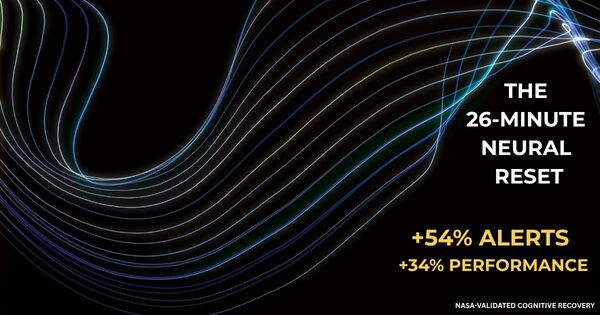
According to a landmark NASA Ames Research Centre study through its Fatigue Countermeasures Program, pilots who took naps averaging 26 minutes saw significant gains in alertness and performance, which is where this timer’s interval comes from.
When you feel foggy or stuck, your brain is signalling that it has hit a wall.
Most people try to push through, leading to diminishing returns, or they take a nap that is too long, which triggers “sleep inertia”, that heavy, groggy feeling that makes it even harder to get back to work.
This 26 minute timer reset is different.
That study found naps of this length boosted alertness by 54% and overall performance by 34%, all without letting you drift into the deep, slow-wave sleep that leaves you feeling disoriented.
Think of this as an emergency bypass for brain fog.
By running this 26 minute timer, you aren’t just taking a break; you are physically re-tuning your focus. It is the ultimate productivity cheat code, allowing you to bypass the fatigue that usually sidelines your progress and return to your desk with a completely clear, high-velocity mind.
Velocity Audit: Prepare Your Environment for Recovery
Pre-Flight Check
Before you initiate your reset, you must remove external friction. Your environment dictates your brain’s ability to switch off.
26 Minute Timer Reset: A NASA-Validated Protocol
Active Wake-Up Protocol
A true neural reset is an active protocol, not just a break. To clear sleep inertia immediately, employ these reactive countermeasures as soon as your timer ends.
Neural Velocity Benchmark: Track Your Gains
Quantify your reset. Track how your focus and energy shift before and after.
| Metric | Before Reset | After Reset |
|---|---|---|
| Focus Intensity | ||
| Cognitive Load |
*Note: These fields aren’t saved anywhere — jot your numbers down elsewhere if you want to compare across sessions.
Calibration & Troubleshooting
If your After Reset score shows minimal improvement, recalibrate using these adjustments:
- Still Groggy? You may have drifted past 26 minutes into deeper sleep. Try trimming a few minutes off your next reset.
- Mind Racing? Re-verify your Pre-Flight Check. Even one open notification can prevent a full cognitive disconnect.
- Physical Tension? Ensure your posture is fully supported; tension masks the restorative effects of the reset.
Next Step: Build Your Custom Workflow
The 26-minute reset is your emergency bypass. Pair it with these tactical tools to sustain high-velocity output:
- Deep Focus: 25-Minute Tactical Stack
- Habit Formation: 30-Day Skill Plan
- Digital Resilience: Digital Sunset Protocol
- Fatigue Management: 6 Neural Reset Protocols
Fix the Mindset, Keep the Momentum
Pro-Tip: Stop Procrastinating
Need repeated resets? You’re likely battling psychological friction, not just biological fatigue. Unclear tasks trigger avoidance.
Still battling avoidance? Read our guide: Why Do I Procrastinate? Understanding the Psychology and How to Stop to fix your approach today.
My 7-Day Performance Audit: From Slump to Surge
I spent seven days testing this 26-minute protocol against my standard, coffee-fueled afternoon slump. The results were undeniable.
By swapping doom-scrolling for a structured neural reset, I reclaimed my focus precisely when my cognitive output usually hit a wall.
On day one, I felt the difference; by day seven, I was consistently getting more done in that afternoon block, though this is just my own experience, not a controlled study. I stopped fighting my brain and started working with its natural rhythms.
The slump is no longer an inevitable destination; it is a scheduled pit stop. The protocol works, but only if you commit to the disconnect.
Decoding Cognitive Recovery: The Neural Reset Cycle
Understand the physiological transition from burnout to peak output.
You cannot manage what you do not visualise. Most professionals view “fatigue” as a monolithic wall that stops their day.
This is a misconception!
Cognitive fatigue is a dynamic signal that your brain’s neural resources are depleted.
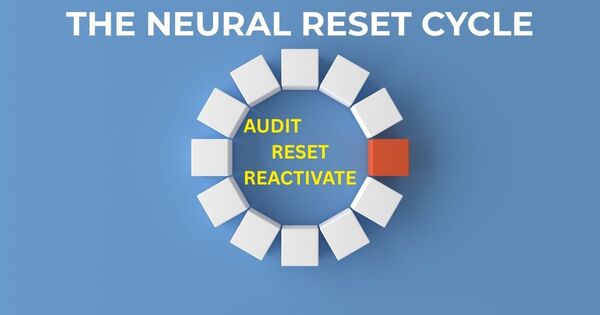
The graphic below illustrates the mechanics of the 26-minute reset, a precise, research-backed intervention designed to clear sleep inertia and re-engage your high-output systems.
By following this 3-stage loop, you shift from a state of diminishing returns to one of high-velocity focus. Study this workflow to master your energy management.

Neural Reset: Protocol Frequently Asked Questions
Can I ask Google or Alexa to set a 26 minute timer?
Yes. Saying ‘Hey Google, set a timer for 26 minutes’ or the equivalent to Alexa or Siri works instantly. Come back here when you want the visible countdown, the reset diagnostic, or the before-and-after tracker.
Is a 26 minute timer reset really better than a 60-minute nap?
Generally, yes. Longer naps risk pushing you into slow-wave sleep, and waking from that stage often causes sleep inertia, that heavy, groggy feeling that can take a while to shake. The 26 minute timer interval is based on the nap length used in the NASA study, which kept participants in the lighter stages of sleep and still produced measurable gains in alertness and performance
Can I perform this protocol more than once a day?
Yes, but only if you are operating at an extreme cognitive deficit. If you are regularly needing more than one reset, you need to audit your sleep hygiene and “Pre-Flight” environmental friction. This protocol is an emergency bypass, not a replacement for your foundational circadian rhythm management.
Does this work if I am not actually sleeping?
Not to the same degree. The alertness and performance gains from the NASA study came from pilots who actually fell asleep, most within about six minutes. Staying awake with your eyes closed and away from screens for the 26 minutes can still help you feel calmer and less scattered, but it isn’t the same mechanism the study measured.
Why is this called a “Velocity” protocol?
Because it is designed for the modern high-performer. It is not about “relaxing”, it is about restoring the speed of your cognitive processing. We treat your brain like a high-performance engine: when it overheats, you do not keep driving; you pull over, reset the temp, and hit the track again.
What if I cannot find 26 minutes during my workday?
If you cannot find 26 minutes to prevent total cognitive failure, you have already lost control of your schedule. Using this protocol is the first step in reclaiming that control. Start with a 10-minute version if you must, but commit to the “Offline” aspect, that is where the actual reset occurs.