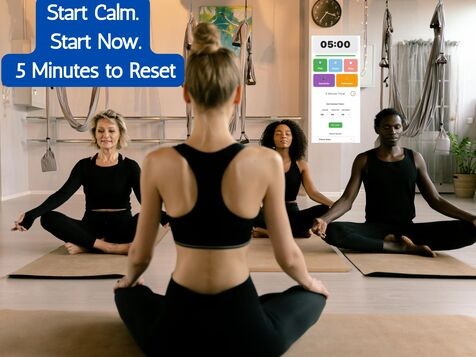


Use this box breathing timer to follow the 4-4-4-4 pattern: inhale for four seconds, hold for four, exhale for four and hold again for four. Start gently and keep the breath comfortable. Use the timer for a few rounds or continue for a short five-minute practice.
How to do box breathing
- Sit or stand in a comfortable position.
- Breathe out slowly.
- Inhale gently through your nose for a count of four.
- Hold for a count of four.
- Exhale slowly for a count of four.
- Hold again for a count of four.
- Repeat for a few rounds, keeping the breath gentle and comfortable.
If four seconds feels uncomfortable, shorten the count or return to normal breathing. The exercise should feel gentle, not forced.
Continue with a longer breathing practice
A few rounds of box breathing may be enough for a short pause. If you would like a longer period for breathing, mindfulness or quiet reflection, try our 12-minute timer for mindfulness practice.
Twelve minutes is one optional length, not a requirement. Choose a duration that feels comfortable and stop or shorten the practice if you feel dizzy, light-headed or uncomfortable.
What research says about slow breathing
Slow, structured breathing can give you a simple way to pause and focus on your breathing. Research suggests that breathing practices may help reduce perceived stress or anxiety for some people, but results vary according to the technique, frequency, setting and individual.
A review of breathing-practice studies included regulated breathing approaches such as box breathing and examined their use in stress- and anxiety-related interventions. Some interventions lasted as little as five minutes, although this does not mean that five minutes is required or guaranteed to produce a particular result. Read the review of breathing practices.
A timer can help provide a consistent pace, but it is not a replacement for professional healthcare or mental-health support.
Common Box Breathing Mistakes
| Common issue | What to try instead |
|---|---|
| Forcing the breath | Breathe gently and reduce the count if you feel strain |
| Holding too long | Use a shorter count or skip the holds temporarily |
| Feeling light-headed | Stop, return to normal breathing and try again later |
| Slouching or feeling restricted | Sit comfortably with your shoulders relaxed |
| Expecting a perfect result | Notice your attention and gently return to the count |
When to pause or seek advice
Stop the exercise and return to normal breathing if you feel dizzy, light-headed, breathless or uncomfortable.
If you have a medical condition, are pregnant or are unsure whether breath-holding exercises are suitable for you, speak with a qualified healthcare professional before trying them.
When you might use box breathing
- Before beginning a short work or study task.
- During a quiet break between activities.
- Before a meeting, presentation or conversation.
- After finishing work, as part of an evening wind-down.
- Before moving into a longer breathing or mindfulness practice.
Use the exercise as a short pause, rather than expecting it to solve every source of stress.
Frequently asked questions
What is box breathing?
Box breathing is a paced breathing exercise with four equal parts: inhale, hold, exhale and hold again. A common pattern is four seconds for each part, which is why it is also called 4-4-4-4 breathing.
How long should I do box breathing?
Start with a few comfortable rounds. A short practice of one to five minutes may be enough for a pause, but there is no required duration. Stop sooner if the breath feels strained or uncomfortable.
What if four seconds feels too long?
Shorten the count. You could try three seconds for each part, or skip the breath holds and return to slow, comfortable breathing. The exercise should not feel forced.
Should I breathe through my nose or mouth?
Many box-breathing instructions use a gentle inhale through the nose and a slow exhale. However, comfort matters most. Do not force a breathing pattern that feels difficult or restricted.
Can I use box breathing before meditation?
Yes. A few slow rounds can be used as a transition into a quiet breathing or mindfulness practice. If you want a longer session afterwards, try our 12-minute timer for mindfulness practice.
What should I do if I feel dizzy or light-headed?
Stop the exercise, return to normal breathing and sit somewhere safe if needed. Next time, use a shorter count, reduce the depth of the breath or avoid the breath holds. Seek medical advice if symptoms are severe, persistent or concerning.
Is box breathing suitable for everyone?
Box breathing is a gentle exercise for many people, but breath-holding techniques may not suit everyone. Speak with a qualified healthcare professional before trying it if you have a medical condition, are pregnant or are unsure whether it is appropriate for you.