13-Minute Exam Revision Sprint: Recall, Check and Repeat

A student writing in a notebook, illustrating the recall-first method behind the 13-minute exam revision sprint.
Explore our complete collection of science-backed timer intervals, from quick 5-minute resets to deep-work blocks.
A student writing in a notebook, illustrating the recall-first method behind the 13-minute exam revision sprint.
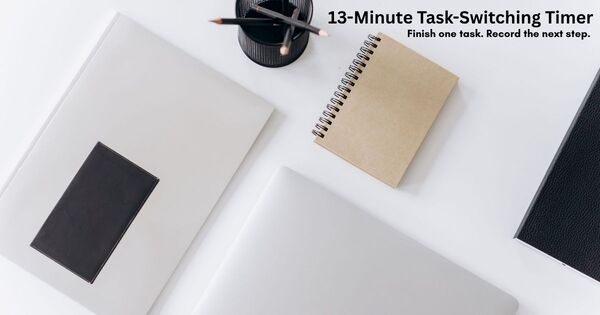
Use a 13-minute timer to focus on one defined task, reach a clear stopping point and write the next action before switching. This practical handoff method can help reduce unplanned task hopping without claiming that one timer length suits everyone.
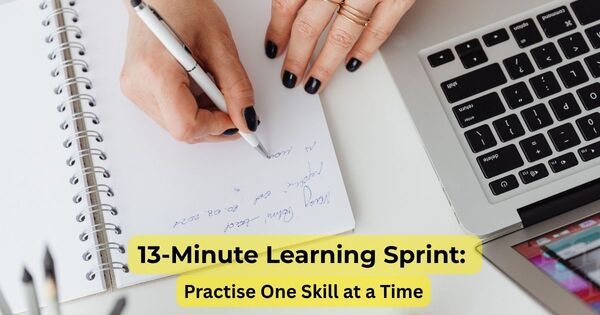
A short, focused practice block for one narrow skill. Here's how to structure a 13-minute learning sprint, and why the timer alone isn't what makes it work.

Compare a 13-minute timer with the traditional Pomodoro method to find the focus structure that best suits your task, energy and working style.
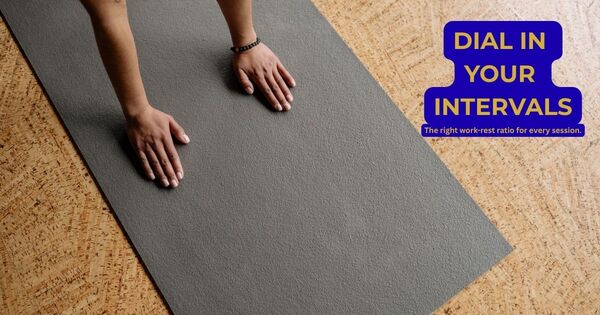
Hands on a mat, ready to start. Dial in the right work-rest ratio for HIIT, home workouts and stretching before you press go.

Discover what scientific research actually reveals about 3-minute micro-breaks, how they influence vigour and fatigue, and why they serve as a practical default for your workday.
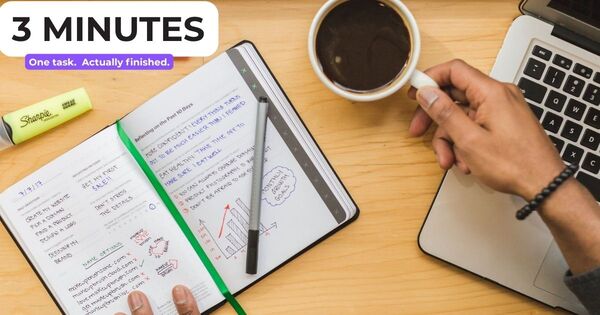
Three minutes is enough to finish one small task or properly start a large one. Here are 50+ micro-tasks across digital admin, creative starters, physical resets and household jobs, plus a picker to choose one fast.

A person working on a laptop uses a 13 minute work sprint within a structured 16-minute productivity cycle.

Students use a 13 minute reading timer for classroom reading blocks and focus sprints.