
40 Minute Deep Work: Extended Focus Sessions That Transform Productivity
Start your first 40-minute deep work session below and discover the difference.
40 Minute Timer
Powered by 5 Minute Timer
TL;DR: Master 40 Minute Deep Work in 90 Seconds
The Big Idea: Work in 40-minute blocks instead of 25-minute ones. Your brain needs 15-20 minutes just to warm up.
The Simple Plan: 40 minutes of focused work → 15 minutes break → Repeat 2-3 times daily
Bottom Line: 40-minute sessions unlock your brain’s full power for deep work.
Have you ever noticed how your best work happens when you completely lose track of time? That magical state where ideas flow easily and hard problems suddenly make sense?
Scientists call this the flow state. Getting into this state regularly requires more than just hoping it happens.
It needs smart timing, good preparation and understanding how your brain works during long focus periods.
After years of trying different ways to be more productive, I’ve found that 40 minute deep work sessions give the perfect balance between staying focused and not getting too tired.
Unlike the popular 25-minute Pomodoro method, these longer 40 minute deep work periods let you dig deeper into hard tasks while keeping your brain working well the whole time.
What is the 40-Minute Deep Work Method?
The 40-minute deep work method is a concentration technique designed to align with the brain’s natural focus limits. By working intensely for 40 minutes on a single task, you capitalise on peak cognitive performance before “vigilance decrement”, a natural drop in attention, begins to occur, making it more effective than longer, unmanaged sessions.
3 Steps to Optimise Your 40-Minute Focus Session
- Silence the Digital Noise: Switch your phone to “Do Not Disturb” and close all browser tabs except the one you are using.
- Define Your “Win”: Write down exactly one task you will complete in these 40 minutes.
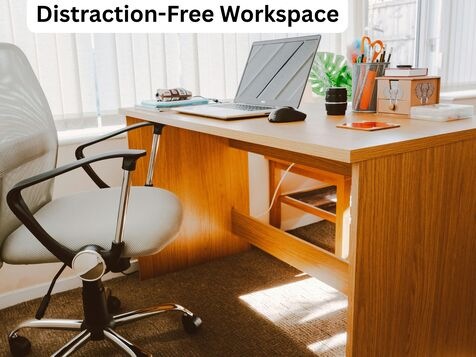
- The Physical Space: Clear your immediate desk area; a clean space reduces the “cognitive load” on your brain.
Why Longer Focus Sessions Work Better
The Brain Science Behind Long Focus Periods
New brain research shows amazing things about how long we can pay attention and why 40-minute deep work sessions work better than shorter ones.
Studies from the University of California San Francisco’s Brain Center show that our brains need about 15-20 minutes to fully get into hard thinking tasks.
This means the usual 25-minute work blocks barely touch the surface of real deep focus.
The important research finding: A big study of brain attention research looked at over 67 brain imaging experiments.
It found that staying focused for a long time turns on a special network in your brain.
This includes parts that help you pay attention and think hard. This “focus network” needs time to fully turn on and work at its best – exactly what 40-minute sessions give you.
Brain research from the University of California shows that staying focused works best between 30-45 minutes for most people.
During this 40 minute deep work window, the thinking part of your brain works perfectly, helping you solve problems and think creatively in ways that shorter time blocks just can’t do.

Cognitive load theory supports longer work sessions for complex tasks. When you’re learning new concepts or tackling challenging projects, your brain needs time to process information and build neural pathways.
Frequent interruptions every 25 minutes actually hinder this natural learning process that 40 minute deep work sessions protect and enhance.
Finding Your Best Focus Time
Why exactly 40-minute deep work sessions?
This time matches perfectly with your natural body rhythms, the 90-minute cycles that control your energy and attention throughout the day.
Research by sleep scientist Nathaniel Kleitman found these Basic Rest Activity Cycles that work all the time during both sleep and when you’re awake.
The long attention advantage: Research shows that creative ideas and breakthrough thinking need you to stay focused for a while.
Studies tracking “eureka moments” find that breakthrough ideas come after long periods of focus, not during quick bursts.
The 40-minute time gives enough time for these brain networks to work together and create real new ideas.
40-minute deep work is long enough to really get into your work and enter a state of focused thinking.
You’ll move past surface thinking into that great state of focused work where breakthrough ideas happen.
But it’s short enough to keep your mind clear and sharp without getting too tired.
I’ve personally found that these sessions eliminate the “getting started” problem that plagues shorter time blocks.
By the time I’ve settled into focused work, there’s still 25-30 minutes of productive time remaining, time that would be lost in shorter sessions.
40 Minute Deep Work Quiz
Test your knowledge of extended focus sessions and discover if you’re ready to transform your productivity!
How to Master Long Focus Sessions
Setting Up Your Focus-Free Space
Creating the right space is really important for distraction-free work during these sessions.
Start by getting rid of digital interruptions, put your phone in aero
plane mode, close all unnecessary browser tabs
and turn off notifications that could break your focus.
Smart space setup: Research shows that certain things in your space can help you focus deeper. Set your room temperature between 68-72°F (20-22°C) for the best brain performance.
Use warm lighting (like regular light bulbs) rather than harsh fluorescent lights, which can cause tiny stress responses that distract your attention.
Your workspace should help you focus on one thing and stay focused throughout your session.
Remove visual mess, make sure you have good lighting, and create a special work area.
I keep only the materials needed for my current task within arm’s reach.
Creating the right space is really important for distraction-free work during these sessions.
Start by getting rid of digital interruptions, put your phone in aeroplane mode, close all unnecessary browser tabs and turn off notifications that could break your focus.
Smart space setup: Research shows that certain things in your space can help you focus deeper. Set your room temperature between 68-72°F (20-22°C) for the best brain performance.
Use warm lighting (like regular light bulbs) rather than harsh fluorescent lights, which can cause tiny stress responses that distract your attention.
Your workspace should help you focus on one thing and stay focused throughout your session. Remove visual mess, make sure you have good lighting, and create a special work area.
I keep only the materials needed for my current task within arm’s reach.
Getting ready before you start makes all the difference for successful sessions. Spend 2-3 minutes looking over your goals and gathering what you need.
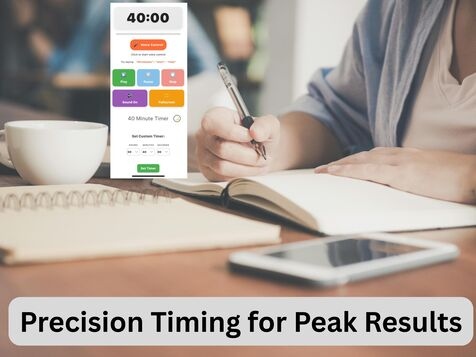
Set up a special 40 minute timer to track your focused work session without the distraction of constantly checking the clock.
This mental preparation and time management tool gets your brain ready for intense focus from minute one.
Types of Work Best Suited for 40 Minute Deep Work Blocks
Creative projects and writing thrive in 40 minute deep work sessions. When I’m writing articles like this one, the first 15 minutes involve getting into rhythm, whilst the remaining 25 minutes produce the majority of quality content that readers actually engage with.
The extended time block allows for deep thinking and creative breakthrough moments.
The research-backed advantage: Neuroimaging studies show that creative problem-solving activates a distributed network including pre-frontal cortex, temporal regions and parietal areas.
This complex network integration requires sustained engagement – precisely what 40-minute sessions facilitate compared to fragmented shorter blocks.
Complex problem-solving requires the sustained attention and mental stamina that 40 minute deep work provides.
Whether you’re debugging code, developing business strategies or tackling analytical challenges, these extended sessions allow for thorough analysis whilst holding multiple variables in working memory simultaneously.
Studying and learning are far more effective in 40-minute blocks of focused work.
Giving your brain uninterrupted time helps you absorb new information, strengthen memory and truly understand what you’re learning, something quick or distracted sessions just can’t match.
Using a dedicated 40 minute timer helps you stay committed to the full learning session without constantly checking the clock.
Keeping Your Energy During Long Focus Sessions
Keeping your brain working well across these sessions needs smart energy management and pacing. Start with medium intensity rather than going all-out from the beginning.
This stops early mental tiredness that can ruin your entire session.
Smart intensity strategies involve changing your mental effort and task switching within your focused time block.
Switch between high-focus tasks and slightly easier activities within your session.
For example, switch between writing new content and editing existing material during your focus block.
Build mental strength and focus stamina slowly for longer sessions. If you’re used to shorter work periods, begin with 30-minute sessions and add five minutes weekly until reaching the full 40-minute time comfortably.
Physical Training for Better Mental Focus
Strength Training for Mental Discipline
Long training sessions work perfectly with your mental focus. These longer workouts allow for complete muscle work whilst building both physical and mental discipline that transfers to thinking sessions.
A typical full-body training session might include:
- 5-minute warm-up with mindful movement
- 30-minute strength training circuit with focused attention
- 5-minute cool-down and stretching with deep breathing

Exercise order in these workouts helps proper muscle activation and recovery.
You’ll have enough time for compound movements like squats, deadlifts and presses without rushing through proper form, the same attention to quality that makes thinking sessions so effective.
Heart Training for Brain Endurance
Extended cardio sessions offer big heart benefits whilst improving mental toughness, skills that transfer directly to brain work sessions.
This time allows you to build heart fitness whilst developing the long attention needed for mental focus work.
Long effort plans for cardio might include steady running, cycling intervals, or circuit training.
The key is keeping consistent effort throughout the session, copying the long focus needed for thinking work.
Heart rate management during cardio teaches you to pace yourself – a valuable skill for mental work sessions too.
Watch your effort levels and adjust intensity accordingly, developing the self-awareness that makes focused sessions more effective.
Mindful Movement for Better Concentration
Extended yoga sessions create deep mind-body connections that enhance your ability to maintain focus during cognitive 40 minute deep work sessions.
These physical practices allow for comprehensive sequences that address flexibility, strength and mindfulness simultaneously.
Extended flow sequences in 40 minute deep work yoga practice mirror the rhythm of mental deep work sessions.
You’ll experience periods of challenge balanced with moments of restoration, building both physical and mental stamina that supports longer 40 minute deep work periods.

These longer sessions develop the same sustained attention skills you need for productive 40-minute deep work.
The discipline required to hold challenging poses translates into better concentration during cognitive tasks, making your 40 minute deep work sessions more effective.
Recovery and Transitions After Extended Focus
Optimal Break Strategies for Mental Recovery
After intense 40-minute deep work sessions, your brain needs good recovery time.
Research from the University of Illinois suggests 10-15 minute breaks give the best restoration without losing momentum between 40-minute deep work blocks.
The brain-switching penalty: Most people don’t know that changing between different types of breaks has very different recovery effects.
Quiet breaks (meditation, stillness) restore your analytical thinking ability, while active breaks (walking, stretching) help creative problem-solving.
Smart break selection based on your next work type can improve your performance in future sessions by up to 25%.
Active recovery works better than passive scrolling after 40 minute deep work. Take a short walk, do light stretching, practice deep-breathing exercises, or do mindful movement.
These activities restore mental energy whilst keeping alertness for your next 40 minute deep work session.
Passive recovery has its place too after demanding 40 minute deep work. Sometimes your brain needs complete rest and mental restoration.
Close your eyes, meditate or simply sit quietly without stimulation to prepare for subsequent 40-minute deep work periods.
Scheduling Multiple Concentrated Work Sessions
Most people can handle 2-3 high-quality 40-minute deep work sessions daily.
Trying more often leads to getting worse results and mental tiredness that reduces how well each 40 minute deep work block works.
The daily brain budget rule: Your brain has limited processing ability, similar to physical energy.
Top performers understand this limit and smartly use their brain resources. Two great 40-minute sessions always beat four okay sessions.
This is why successful executives, researchers and creatives protect their peak mental hours rather than spreading effort across the entire day.
Energy management across sessions needs smart timing for multiple 40 minute deep work periods.
Schedule your hardest work during peak energy hours, typically mid-morning for most people, when your first 40 minute deep work session will be most productive.

Week-long planning strategies prevent burnout from excessive 40-minute deep work. Try alternating intensive days with lighter, more administrative tasks.
Your brain needs variety to maintain peak performance across multiple 40-minute deep work sessions throughout the week.
Troubleshooting Common Focus Challenges
Overcoming Mid-Session Attention Drift
Attention drift is natural when building extended focus capacity, especially during longer sessions.
When you notice your mind wandering or experiencing mental fatigue during 40 minute deep work, acknowledge it without judgement and gently redirect focus to your task.
Refocusing techniques include taking three deep breaths, reviewing your session objectives, practising brief mindfulness or noting what distracted you to address later.
These quick interventions help you return to productive concentration without losing significant time.
Sometimes you need to recognise when to pause versus push through during focused work periods.
If you’re genuinely exhausted or facing personal stress, shorter sessions might be more productive than forcing extended concentration that compromises work quality.
Progressive Training for Long Focus
Start with shorter sessions if a full 40-minute deep work feels too challenging initially.
Begin with 30-minute blocks and gradually increase duration as your focus improves, working step by step towards complete extended concentration sessions.
If even 30 minutes feels too long initially, try 20-minute intervals to build your focus gradually.
Progressive extension works best when increased slowly towards sustained focus periods.
Add 3-5 minutes weekly rather than jumping to full sessions immediately. This gradual approach builds lasting capacity for prolonged concentration.
Mental strength development for extended focus requires consistent practice. Like physical fitness, attention span improves through regular training rather than occasional intense efforts.
Daily shorter sessions build towards effective deep work.
Advanced Techniques for 40 Minute Deep Work
Adapting Pomodoro for Extended Sessions
The traditional Pomodoro technique uses 25-minute intervals, but this hybrid approach allows flexibility based on task complexity and cognitive demands.
Use 25 minutes for routine tasks and 40 minutes for deep work for challenging projects requiring sustained attention and deep analysis.
Task-based duration selection maximises productivity through strategic timing and work session optimisation.
Administrative work might need only 20-25 minutes, whilst creative projects benefit from extended 40 minute deep work sessions that allow for genuine creative breakthrough and flow state achievement.
Achieving Flow State in Long Sessions
Creating the right challenge levels is essential for flow state entry during 40-minute deep work.
Tasks should stretch your abilities without being overwhelming. Research by Mihály Csíkszentmihályi shows that flow requires a careful balance between challenge and skill level.
Too easy leads to boredom; too difficult creates anxiety that disrupts sustained concentration effectiveness.
Reducing interruptions during extended focus sessions protects flow state development.
Train colleagues and family members to respect your deep work boundaries, ensuring your concentrated work periods remain truly distraction-free for maximum impact.
Prioritising session quality matters more than quantity in sustained focus work. One deeply focused period often produces superior results over three distracted hours, making each concentrated session incredibly valuable for meaningful progress.
Start Your 40 Minute Deep Work Practice Today
Ready to transform your productivity with 40 minute deep work sessions? Begin by choosing one challenging task that requires sustained concentration and commit to your first session tomorrow morning.
Start with a single session when your mental energy peaks. Use a reliable 40-minute timer to maintain focus and track progress without the distraction of constantly checking the clock during your concentrated work period.
Building lasting habits around extended focus requires consistency over perfection and gradual skill development.
Commit to these sessions three times weekly rather than attempting daily sessions initially.
This approach develops sustainable concentration abilities and prevents productivity burnout.

The combination of mental focus work and physical training creates a powerful foundation for high performance and peak productivity.
Your focus will improve alongside your physical fitness, creating positive momentum that makes each session more effective than the last.
Remember, mastering these sessions takes practice, patience, and consistent effort.
Be gentle with yourself as you develop this valuable skill and build your focus muscles.
The payoff in productivity enhancement, creative breakthrough, and work satisfaction makes the initial challenge of learning this approach completely worthwhile.
Start your first session today.
Your most important projects deserve this level of focused attention and deep focus, and you deserve the breakthrough results that effective extended focus consistently delivers.
Frequently Asked Questions
Q: How long should a deep work session be? A: Most productivity experts recommend 60-90 minutes for beginners, gradually building up to longer sessions. 40-minute sessions hit the sweet spot – long enough for your brain to fully engage (which takes 15-20 minutes) but short enough to maintain peak focus without mental tiredness. Start with a simple 40 minute timer to track your sessions consistently.
Q: Is 40 minutes better than 25-minute Pomodoro sessions? A: Yes, for complex tasks requiring deep thinking. While 25-minute Pomodoro works well for routine tasks, 40-minute sessions allow you to move beyond the “warm-up” phase into genuine deep work. Your brain needs time to fully engage with cognitively demanding work.
Q: How many deep work sessions can I do per day? A: Research suggests most people can handle 2-3 high-quality 40-minute deep work sessions daily, totaling around 2-4 hours maximum. Attempting more often leads to diminished returns and mental exhaustion that compromises work quality.
Q: What should I do during breaks between deep work sessions? A: Take 10-15 minute breaks with physical movement like walking, stretching, or deep breathing. Avoid screens, social media, or cognitively demanding activities. The goal is mental detachment to allow your brain to rest and consolidate information.
Q: Can I build up to longer deep work sessions gradually? A: Absolutely. Start with 30-minute sessions if 40 minutes feels overwhelming, then add 5 minutes weekly until you reach your target duration. Like physical exercise, concentration is a skill that strengthens with consistent practice rather than forcing long sessions immediately.
Q: What types of work are best suited for 40-minute deep work blocks? A: Creative projects, complex problem-solving, learning new skills, strategic planning, writing, coding, and analytical work. These tasks require sustained attention and benefit from the extended time needed to reach flow state and produce breakthrough insights.
If you find 40 minutes isn’t enough for your larger projects, try our 90-Minute Deep Work Timer to master your next Ultradian Rhythm cycle.

Dwayne is a productivity practitioner and the architect of the 2026 Focus Framework. As a self-taught specialist in cognitive endurance, he spent over a decade reverse-engineering task inertia and “flow-state” mechanics to create the systems found on 5 Minute Timer. Unlike theoretical consultants, Dwayne’s methodology is rooted in Neural Anchoring and zero-latency logic, practical tools developed through years of in-the-trenches testing. He specialises in helping high-performance professionals ‘drop in’ to awareness and activate the Task-Positive Network (TPN) to eliminate procrastination at the source.