
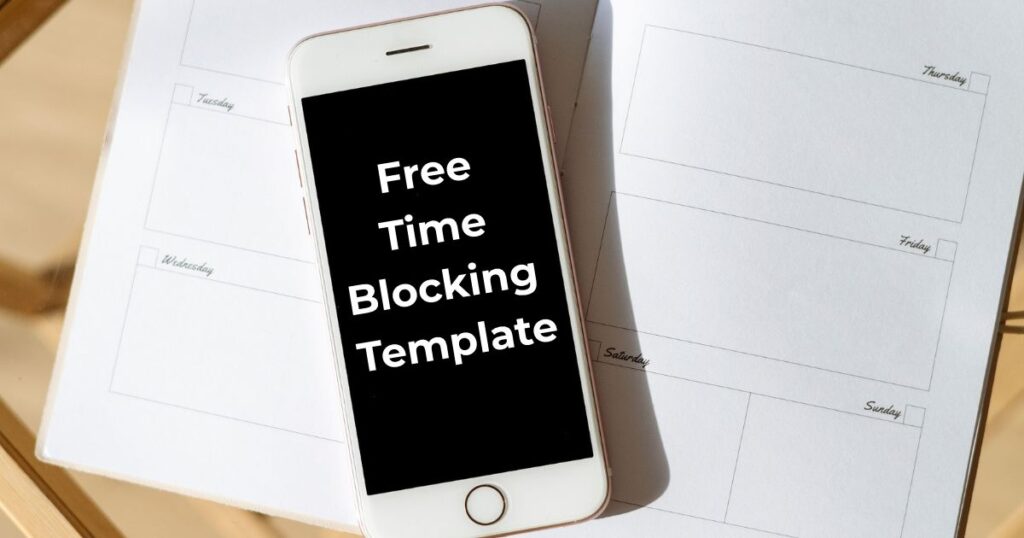

A time blocking template takes the guesswork out of planning your day. A blank calendar or a plain notebook page works too, but a template removes the part most people get stuck on: deciding how to lay the day out before you’ve even started. This free one gives you that structure already built, so you can focus on deciding what goes in each slot rather than how to draw the grid.
Table of Contents
What’s In This Template
The daily time-blocking template is a single printable page broken into time slots running through a normal working day, with space beside each one to write what you’re doing. There’s also a small section at the top for the day’s top priorities, so the slots you fill in actually connect to what matters that day rather than just whatever comes to mind first.
How to Use It
Fill it in the night before or first thing in the morning, before anything else has a chance to grab your attention. Start with the top-priorities box: two or three things, no more, that would make the day a win if they got done.
Then work through the time slots and assign each priority a specific block, generally earlier in the day while your focus is freshest. Everything else, meetings, admin, smaller tasks, fills in around those blocks rather than competing with them.
Cal Newport makes a similar case in Deep Habits: The Importance of Planning Every Minute of Your Work Day, arguing that the discipline of deciding in advance matters more than getting the schedule perfect.
For the full reasoning behind why this works better than an open to-do list, our time blocking method guide walks through the approach in more depth.
A Worked Example
Say your top priority is finishing a report draft. Instead of leaving it as a vague list entry, it gets a 9am to 11 am block before meetings start eating into the morning. A second priority, replying to a backlog of emails, gets a dedicated 20-minute slot at 11 am rather than being handled in the gaps between other things all day. The rest of the template fills in around those two blocks: a lunch slot, an afternoon meeting block, and a short wrap-up slot at the end of the day to note what didn’t get done and needs moving to tomorrow.
Common Mistakes to Avoid
The most common mistake with a time blocking template is overfilling it, scheduling every single minute leaves no room for anything running long, and one delay cascades through the rest of the day. Leave at least one buffer slot, ideally after lunch, for overflow. The second is treating the template as fixed once it’s filled in. If something urgent comes up, move the affected block rather than abandoning the plan for the whole day, our Time Blocking vs To-Do List comparison covers this same point if you want more on handling interruptions.
Frequently Asked Questions
Is this time blocking template free?
Yes, it’s a free PDF you can download and print as many times as you need.
Can I use this template digitally instead of printing it?
Yes, most PDF readers let you type directly into the slots, or you can use it as a reference while blocking out the same structure in a digital calendar.
How is this different from a normal daily planner?
A standard planner usually just lists tasks in order. This time blocking template is built around fixed time slots, so each task gets an actual block rather than just a position on a list.
What if I don’t finish everything in my blocks?
Move the unfinished item to tomorrow’s template rather than trying to squeeze it into the rest of today, that’s exactly what the end-of-day wrap-up slot is for.









[…] as expected, not as a sign the plan failed. For the reasoning behind buffer slots generally, our time blocking template guide covers this same idea for any schedule, ADHD or […]