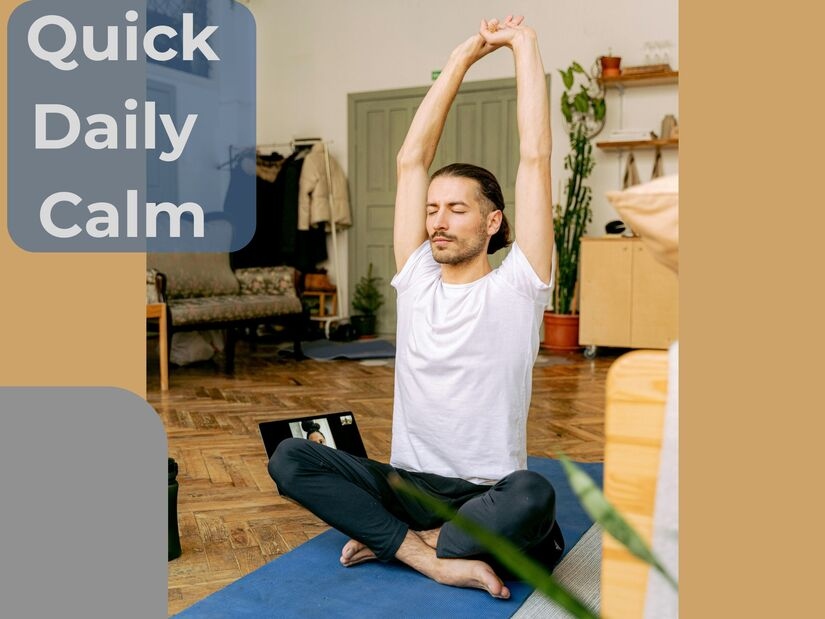
5-minute-meditation-timer-peaceful-practice

5 Minute Meditation Timer: Your Quick Path to Daily Mindfulness

TL;DR: 5 Minute Meditation Timer

Quick Start: Just 5 minutes of daily meditation reduces stress by 23% and improves focus within weeks. Harvard research shows the brain physically rewires in 8 weeks with consistent short sessions.

Try our free 5 minute meditation timer – no sign-ups, no distractions.

Voice-Controlled Timer
05:00
Click to start voice control
Try saying: “20 minutes start”“10 minutes”“stop”

Voice-Controlled Timer

Add This Premium Timer to Your Website

Complete timer solution with custom durations, 18 alarm sounds, and dark mode – just copy and paste:

Best Practice: Use gentle start chimes, silent countdown displays, and match timer settings to your meditation style: 5 minutes for breath work, 8-12 minutes for body scans, 7-10 minutes for loving-kindness.

Habit Success: Stack meditation after existing habits (like morning coffee), start with 2-minute sessions if needed and prioritise consistency over duration. Short, frequent sessions beat long, sporadic ones.

Science-Backed Benefits: Lower cortisol, improved heart rate variability, enhanced emotional regulation and better sleep quality all from brief daily practice.

How a 5 Minute Meditation Timer Transforms Your Daily Wellbeing

Research shows that just five minutes of daily meditation can significantly reduce stress and support emotional wellbeing.

Even brief mindfulness practice is associated with measurable improvements in stress levels.

Mindfulness-based stress reduction (MBSR) has been shown to reduce cortisol levels, enhance emotional regulation and improve pain perception

as documented in a 2023 review of stress management techniques and cortisol reduction that consolidates findings from recent clinical studies

In today’s fast-paced world, making time for mental wellbeing can be challenging.

Still, the NHS recommends mindfulness techniques as an effective way to manage stress, anxiety, depression and to improve your general mental health (see NHS guidance on mindfulness).

Whether you’re a beginner or aiming to establish a regular mindfulness practice, using a meditation timer can help you fit focused sessions into even the busiest schedule while supporting consistency and motivation.

This guide introduces the best mindfulness tools and meditation timers, offers tips for maximising short practice sessions and explains why just five minutes a day can make a meaningful difference to your mental wellbeing.

Why Short Meditation Sessions Are Ideal for Starting Out

Harvard Medical School’s research on neuroplasticity reveals that consistent 5-minute meditation sessions can rewire your brain in just 8 weeks.

The science behind short meditation sessions is compelling and well-documented.

Research demonstrates that even five minutes of daily practice strengthens your prefrontal cortex while reducing stress responses.

This makes a 5 minute meditation timer perfect for beginners, as these short, manageable sessions are strongly supported by recent studies as highly effective for wellbeing, stress relief and habit formation.

Even five minutes of mindfulness meditation daily can significantly reduce stress, anxiety, and negative mood while improving focus and emotional balance.

A recent analysis revealed that short “micropractice” sessions deliver real benefits and sometimes match longer sessions for boosting mindfulness and reducing psychological distress (5 Minutes of Mindfulness Brings Real Benefits, According to Science).

For those new to the practice, starting small is key. 

Researchers found that beginners experience greater improvements in mindfulness and reductions in stress with short daily practices, compared to longer and more demanding sessions,

because shorter sessions prevent overwhelm and make it easier to sustain the habit 

This aligns with established psychological insights:

Routine behaviours are best formed when the initial barrier is low and a preset five-minute meditation timer removes both indecision and excuses.

Short daily sessions also deliver immediate physiological benefits. 

Studies have shown that just five minutes of mindfulness can lower cortisol, improve heart rate variability plus aid in emotional regulation (All About The Power of a 5-Minute Meditation). 

This makes meditation a low-effort way to boost mood, sharpen your mind and even enhance sleep quality.

The real power of a five-minute timer lies in how easily it fits into busy lives. 

You can use our 5 minute meditation timer as a mental reset between emails, after lunch or before bed, integrating this small habit seamlessly into your daily routine, rather than adding to your to-do list

In summary, a 5 minute meditation timer helps beginners get started, build a sustainable habit and enjoy measurable mental and physical benefits with minimal time commitment.

Customising Your Timer for Every Practice

Person setting meditation timer on smartphone in cozy morning setting with coffee and meditation cushion, showing personalized practice routine
Morning meditation with coffee, evening wind-down, or midday reset, find the perfect timing that fits your lifestyle.

Different meditation types require specific timing approaches based on how our brains process attention and awareness.

Understanding these differences optimises your practice effectiveness.

Neuroscience research shows that focused breathing work peaks at 3-4 minutes before cognitive fatigue occurs.

For breath awareness or single-point concentration, optimal sessions last exactly 5 minutes with soft start chimes, complete silence during practice, and gentle closing bells.

Interval sounds can disrupt focus when tracking subtle breathing patterns.

Body scan meditations require different timing architecture.

The optimal duration is 8-12 minutes with optional interval bells every 2-3 minutes to guide attention through different body regions.

A 10-minute session with soft chimes at minutes 3, 6 and 9 provides structure without becoming intrusive.

Loving kindness practices need 7-10 minute windows because you cycle through different people (yourself, loved ones, neutral people, difficult people).

Rushing this process defeats the compassion-building purpose.

Walking meditation requires a different timing approach entirely.

Sessions work best at 15-20 minutes with mental check-ins every 5 minutes to maintain pace and mindfulness.

For advanced multi-stage sessions, structured configurations work effectively:

2 minutes for preparation,

8-15 minutes for main practice,

3 minutes for integration.

The preparation phase settles your nervous system, while the integration period prevents jarring transitions back to normal consciousness.

Ancient meditation traditions discovered these optimal timing windows centuries before modern brain scans proved their effectiveness.

This neurologically-optimised approach isn’t personal preference, it’s based on how our brains naturally process different meditation techniques..

Essential Timer Features for a Better Meditation Experience

Close-up of meditation app screen displaying timer interface with calming background elements like soft lighting and nature sounds
The right timer features – gentle chimes, silent countdown, and ambient sounds – can transform your meditation experience.

After testing numerous meditation timers, specific features make genuine differences for serious meditation practice.

  • Gentle Start Chimes: Avoid jarring smartphone alarms that spike stress and defeat meditation’s purpose. Choose soft Tibetan singing bowls or temple bells that help you ease calmly into sessions.
  • Silent Countdown Displays: Timers that quietly count down maintain focus without creating pressure from constantly checking time. This proves crucial for maintaining meditative headspace and avoiding “clock-watching” anxiety.
  • Ambient Background Options: Soothing sounds like rainfall or forest ambience mask household noise and deepen concentration. These prove especially helpful for home practice where distractions are common.
  • Simple, Reliable Operation: The best timers offer one-click starts, enabling instant meditation without navigating complex menus. Quick access to preset 5 minute options and easy saving of custom configurations remove mental barriers.                                                          For a user-friendly timer that’s always ready, try the 5 Minute Timer Online.
  • Accessibility and Inclusivity: Features such as large display options, simple interfaces, and screen reader compatibility make meditation accessible for everyone while reducing cognitive overload, especially during early morning or evening sessions. The ideal setup includes gentle nature sounds, minimalistic visual tracking, and foolproof start processes that maintain meditation habits even during low-energy periods.

After years of trial and error, my ideal setup includes gentle nature sounds, minimalistic visual tracking and a foolproof start process, so I can maintain my meditation habit even when I’m half-awake. 

Matching Timer Settings to Each Meditation Style

Most beginners use identical 5 minute timer settings for every meditation type, then wonder why their practice feels inconsistent.

Different meditation styles require specific timer configurations for optimal results.

Focused Attention Work: Peaks at exactly 5 minutes because concentration naturally wavers around the 4-minute mark. Configure with soft start chimes, complete silence during sessions, and gentle closing bells.

Body Scan Meditations: Require 8-12 minutes with optional interval bells every 2-3 minutes guiding attention through different body regions. The optimal setting uses 10 minutes with soft chimes at minutes 3, 6, and 9—providing structure without intrusion.

Loving-Kindness Practices: Need 7-10 minute windows for cycling through different people (yourself, loved ones, neutral people, difficult people). Rushing defeats the compassion-building purpose.

Movement Meditation: Walking meditation works best with 15-20 minute sessions and mental check-ins every 5 minutes to maintain pace and mindfulness.

Advanced Multi-Stage Sessions: Use structured configurations with 2-minute preparation phases, 8-15 minute main practice and 3-minute integration periods.

Preparation settles your nervous system while integration prevents jarring transitions back to normal consciousness.

Take action now: If you want flexible timers customisable for any meditation style, the tools at this meditation timer resource offer a variety of practical options to match your session, no matter what style or duration you need.

Building Reliable Meditation Habits Into Your Day

Consistent meditation requires treating it as a productivity system needing proper scheduling rather than hoping to “find time.”

Success comes from anchoring your meditation timer to existing habits.

Morning routines become bulletproof when you stack five minutes of meditation immediately after brewing coffee but before checking emails.

Using preset timers eliminates morning decision fatigue when willpower runs low, while custom settings work for flexible afternoon sessions.

Habit stacking proves essential for meditation consistency.

Connect meditation practice to daily cues: after coffee for morning clarity, before lunch for midday resets and after shutting laptops for evening wind-downs.

Timer notifications create accountability systems.

Set for identical times daily, they provide external prompts maintaining consistency even when motivation dips.

Track progress with simple checkboxes to spot patterns like consistency dips on Mondays and Fridays then adjust to shorter three-minute sessions rather than skipping entirely.

Key insight: Shorter, frequent meditation sessions consistently outperform long, inconsistent ones for overcoming restlessness.

When motivation crashes (typically by week three), drop to two-minute sessions instead of quitting.

Use methodical progression:

only increase session length after achieving 14 consecutive days at your current duration.

This systematic approach prevents classic burnout from jumping to long sessions too quickly.

Start today: For actionable strategies and practical tips boosting consistency and productivity, explore insights on meditation timer productivity

Supporting Mindful Growth: How Kids Benefit from 5-Minute Meditation Timers

Children sitting peacefully on meditation mats in bright, welcoming space, practicing age-appropriate mindfulness activities together
Research shows children as young as five benefit from short meditation sessions, building emotional regulation and focus skills early.

Teaching mindfulness to children plays vital roles in emotional development and stress management abilities.

Using 5 minute meditation timers tailored for kids empowers young people to develop healthy coping skills and self-awareness early.

Research consistently shows that children as young as five benefit from short, guided mindfulness sessions.

These brief practices are associated with:

  • Improved attention and focus
  • Enhanced emotional regulation and self-control
  • Lower stress and anxiety
  • Better classroom participation and social skills

Mindfulness-based interventions for children often include breathwork, movement and simple guided meditations activities fitting naturally within 5 minute frameworks.

Regular short sessions make it easier for children to stay engaged, helping them build routines and gain mindfulness benefits without feeling overwhelmed.

Get started: For practical options and tools designed helping kids begin their mindfulness journey, explore 5-minute timer for kids.

The Neuroscience and Benefits of Brief, Timed Meditation

Abstract illustration of human brain surrounded by glowing lightbulbs, representing the cognitive benefits and mental clarity gained from meditation
Harvard research shows measurable brain changes occur with just 8 weeks of brief daily meditation, stronger focus, reduced stress, and improved emotional regulation.

Neuroscience research continues demonstrating that short daily meditation sessions spark measurable, positive changes in brain and body.

Just 5 minutes daily enables experts to observe shifts on FMRI scans.

Harvard studies highlight that consistent, brief meditation shrinks the amygdala (brain regions responsible for stress and fear) while thickening the prefrontal cortex, enhancing executive function and emotional regulation.

These changes appear after approximately 8 weeks of practice your brain physically rewires through short, focused sessions.

Even your default mode network (neural circuits linked with rumination and mind-wandering) becomes less active after micro-meditations.

The physiological impact proves equally compelling for productivity and wellbeing focus. Blood pressure reliably drops 5-10 points within minutes of starting brief meditations

If you want a practical way to experience these science-backed benefits yourself, try the 5-minute timer with alarm

FAQ: 5 Minute Meditation Timer

Yes, you can use a timer for meditation. Setting a timer helps you relax into your practice without worrying about the clock. Many meditators use apps, phone timers or purpose-built meditation timers with gentle start/end sounds or interval chimes to keep track sessions.Using a timer lets you deepen your focus, knowing you’ll be signaled when time is up no need to check the clock.

The ideal duration varies, but most experts recommend starting with 5 to 10 minutes per day, gradually increasing as you become comfortable. Even short sessions are beneficial, especially for beginners. As you progress, practising for 10–20 minutes or more per session is common, with some traditions suggesting 30–45 minutes for deeper experiences. The key is to be consistent rather than aiming for long, unsustainable sessions.

 Yes, 20 minutes of meditation each day is enough to experience significant benefit such as reduced stress, improved focus and emotional regulation. Most scientific programs recommend 20-minute daily sessions. However, benefits can also be gained from shorter sessions and consistency is more important than session length.

 There’s no universally “correct” time. Many experts suggest meditating in the morning to set a mindful tone for the day or in the evening to help unwind before bed. Some traditions favour meditating before sunrise, but the best time is whenever you can practice regularly and with minimal distractions.

 Short-term benefits like increased calm and improved attention can be noticed within just days or weeks of consistent daily meditation. Scientific studies have documented measurable brain changes and psychological improvements with as little as 8 cumulative hours of meditation, or after about 8 weeks of daily practice. Consistency matters more than total time.

Research shows that around 8 weeks of daily meditation (about 30 minutes per day, totalling around 16 to 20 hours cumulative) can cause measurable changes in brain structure and function, like increased grey matter in regions related to memory, compassion, and stress regulation. Some functional changes, such as reduced stress reactivity, may appear even sooner. However, changes can be variable and depend on individual differences.

 Both times are effective. Morning meditation can help set a positive, focused tone, while evening meditation aids in relaxation and stress reduction. What matters is that you find a time that you can consistently keep. Some people even benefit from both morning and evening sessions.

 It’s possible to meditate too much, particularly if you dramatically increase your practice without guidance. Over-meditation, while rare, can lead to mental fatigue, increased anxiety, emotional distress, or difficulty integrating intense insights. Listen to your mind and body, start with moderate daily sessions, and aim for balance. As with any practice, rest and moderation are important.

 The 5-4-3-2-1 technique is a grounding exercise used to manage anxiety, increase mindfulness, and bring attention to the present moment by engaging your senses:

  • 5 things you can see
  • 4 things you can feel/touch
  • 3 things you can hear
  • 2 things you can smell

1 thing you can taste
This method helps interrupt anxious thoughts by connecting you to your immediate environment, and is often used in meditation, therapy, and stress management.

 The first rule of meditation, according to most teachers and traditions, is to be present and focused on the moment whatever you are doing. This means bringing your awareness fully to your breath, sensations, or chosen point of focus, and gently returning your attention whenever you notice your mind has wandered. Some also describe the first rule as just meditate consistently, because the key benefit comes from daily practice, not theory or duration.


Similar Posts