Evening Routine Ideas: 30-Minute Night Rituals to Sleep Better and Stress Less
You finish work at 6 pm. By 11 pm, you’re still scrolling your phone, half-watching Netflix, snacking mindlessly, wondering why you’re not tired yet.
Then 2 am arrives.
Your mind races.
Tomorrow feels impossible.
The problem isn’t that you don’t sleep enough hours. It’s that you never signal to your body that the day has ended.
You go from full throttle to bed without transition, expecting your brain to switch off like a laptop.
This guide provides seven evening routine ideas designed to create that crucial wind-down period.
Not complicated rituals requiring an hour of your night.
Simple 30-minute habits that genuinely improve sleep quality, starting tonight.
Why Evening Routine Ideas Actually Work
Sleep Foundation research shows that consistent pre-bed routines significantly improve sleep onset time and overall sleep quality.
Your brain craves patterns.
When you repeat the same sequence nightly, your body learns: these actions mean sleep is coming.
Think of your nervous system as having two modes.
Sympathetic (fight or flight) keeps you alert, focused and ready for action.
Parasympathetic (rest and digest) promotes calm, repair and sleep.
You spend most days stuck in sympathetic mode.
Evening routines deliberately activate your parasympathetic nervous system. The repetitive, calming activities signal safety.
Your heart rate slows.
Cortisol drops.
Melatonin production increases.
Your body temperature begins its natural pre-sleep decline.
Without this transition, you’re asking your amped-up nervous system to crash instantly at bedtime.
That doesn’t work. Just as you need morning routines to start the day properly, evening routines complete the daily cycle.
The Digital Sunset: Your First Evening Routine Idea
Set a specific time, 9 pm, 9:30 pm, whatever works and call it your digital sunset.
After this time,
Phones go on aeroplane mode.
Laptops close.
Tablets vanish.
Blue light from screens suppresses melatonin production for up to three hours.
Your brain interprets this light as midday sun, keeping you wired when you should wind down.
The first three nights feel impossible. Your hand reaches for your phone automatically.
You’ll feel a low-grade anxiety, like you’re missing something important. Push through.
This discomfort is withdrawal from the dopamine hits social media provides.
By night four, something shifts. You notice the extra time.
That missing hour reappears.
Instead of scrolling mindlessly, you can actually implement the other evening routine ideas on this list.
Keep a book or journal where you normally leave your phone. When you reach for the device, grab the substitute instead.
5-Minute Brain Dump: Empty Your Mental Clutter
Grab any notebook. Set a 5-minute timer. Write everything tumbling through your mind.
Tomorrow’s to-do list.
That conversation is replaying endlessly. Worries about next week.
Ideas for projects.
Random thoughts.
Everything goes on paper.
Don’t organise.
Don’t make it neat.
Just dump.
The physical act of writing moves thoughts from your head onto paper, creating psychological distance.
Research shows this simple practice reduces rumination and improves sleep quality.
Alternative version: gratitude journaling. Write three specific things that went well today.
Not generic (“I’m grateful for my family”) but concrete (“Sarah made me laugh when she did that ridiculous impression”).
This shifts your brain’s focus from problems to positives before sleep.
You’re effectively choosing what thoughts accompany you to bed.
10-Minute Reading Ritual: The Original Screen
Physical books only. Paperbacks, hardcovers, magazines. No e-readers emitting blue light.
Avoid thrillers or horror before bed, you want calm, not adrenaline.
Set a timer for your evening reading, even 10 minutes helps, but 20 minutes is ideal for deeper relaxation
Reading serves multiple purposes. It occupies your mind, preventing anxious thought spirals.
The repetitive eye movements and page-turning create a meditative rhythm. Your body learns this activity precedes sleep.
Create a specific reading spot.
Not your desk (work association).
Not the sofa where you watched TV all evening.
A comfortable chair, your bed propped up with pillows, somewhere that becomes your wind-down space.
Many people fall asleep during this 10-minute window.
That’s perfect.
You’ve created such effective relaxation that your body takes over.

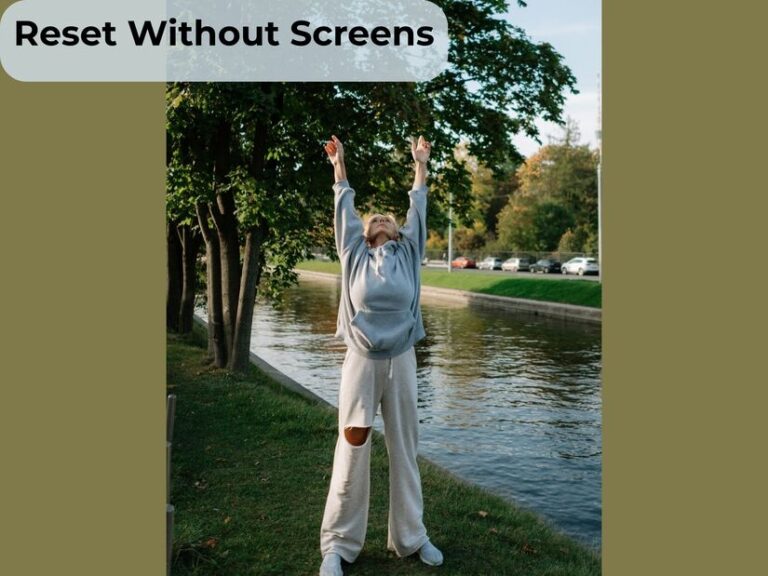
15-Minute Gentle Movement: Release Physical Tension
Your body holds the day’s stress as physical tension. Tight shoulders. Clenched jaw. Tense lower back. Gentle evening movement releases this accumulated tightness.
Spend 15-20 minutes on gentle movement. Choose any low-intensity activity:
Gentle yoga: Focus on hip openers, forward folds and supine twists.
Skip energising poses like backbends or inversions.
Child’s pose, legs up the wall, and reclined butterfly pose activate your parasympathetic nervous system.
Light stretching: Target areas you know hold tension.
Neck rolls.
Shoulder stretches.
Seated spinal twists.
Cat-cow movements.
Nothing intense, just releasing tightness.
Slow walking: If the weather permits, a gentle 15-minute walk around your neighbourhood.
The repetitive movement, fresh air and temperature change all promote better sleep.
Just avoid vigorous pace, strolling, not power walking.
The key is low intensity. You’re releasing energy, not building it.
Your heart rate may increase slightly, but it should remain within a comfortable zone.
Many stress management techniques include evening movement as a core component for exactly this reason.
3-Minute Breathing Reset: Activate Calm Instantly
Controlled breathing is the fastest way to shift your nervous system from alert to calm. Set a 3-minute timer and try this simple pattern:
Breathe in for 4 counts. Hold for 4 counts. Breathe out for 6 counts. Hold for 2 counts. Repeat.
The extended exhale specifically activates your vagus nerve, which controls parasympathetic response. Within minutes, you’ll feel your heart rate slow and tension ease.
Alternative: box breathing. Breathe in for 4, hold for 4, out for 4, hold for 4. Equal counts create meditative rhythm.
Don’t complicate this. Lie on your back with one hand on your chest, one on your belly. Focus on the belly hand rising with each inhale. If your mind wanders, that’s normal. Notice it, return to counting.
Three minutes of deliberate breathing beats 30 minutes of tossing and turning whilst your mind races.
Optimise Your Sleep Environment: The Physical Foundation
Your bedroom needs three conditions for optimal sleep: cool, dark, quiet.
Temperature: Between 15-19°C (60-67°F) according to sleep research. Your body temperature naturally drops during sleep. A cool room facilitates this process. Too warm disrupts sleep cycles.
Darkness: Complete darkness. Blackout curtains if street lights intrude. Cover any electronics with glowing lights. Even small amounts of light suppress melatonin production.
Sound: White noise machines or fans mask irregular sounds that wake you. Earplugs work if your partner snores or you live on a noisy street.
Set these conditions during your evening routine, not right before bed. By the time you finish your wind-down activities, your room has reached ideal sleep temperature and darkness.
One often-forgotten element:
scent.
Lavender, chamomile or cedarwood essential oils in a diffuser create olfactory sleep cues.
Your brain learns to associate these scents with sleep.
Consistent Timing: The Pattern Your Body Craves
Here’s the uncomfortable truth: your evening routine only works if you do it every night. Weekends included.
Your circadian rhythm thrives on consistency.
Going to bed at 10:30 pm Monday through Friday, then 2 am on Saturday, confuses your internal clock.
You’re essentially giving yourself jet lag every weekend.
Pick realistic times you can maintain seven days a week. If you’re naturally a night owl, don’t force a 9 pm bedtime.
Start where you are, then gradually shift earlier if needed.
Your routine might look like this:
- 9:00 pm: Digital sunset, phone on aeroplane mode
- 9:05 pm: 5-minute brain dump or gratitude journaling
- 9:10 pm: 15-minute gentle stretching
- 9:25 pm: Shower, wash face, teeth
- 9:35 pm: 10-minute reading in bed
- 9:45 pm: 3-minute breathing exercise
- 9:48 pm: Lights off
Thirty minutes total. Doable. Sustainable. Effective.
Building consistent evening routines follows the same principles as breaking bad habits, you’re replacing screen time and stimulation with calming alternatives.

Aim for 30-45 minutes minimum.
Less than 30 minutes doesn’t give your body sufficient time to shift from sympathetic (alert) to parasympathetic (calm) nervous system activation.
More than 60 minutes becomes unsustainable for most people’s schedules.
The sweet spot is 30-45 minutes of dedicated wind-down activities.
This provides enough transition time without feeling like a massive time commitment.
Remember: you’re not adding time to your evening.
You’re replacing mindless scrolling and TV watching with intentional activities that actually improve your sleep.
What if I work late shifts or irregular hours?
Evening routine ideas work regardless of when your “evening” occurs. If you finish work at 2 am, your wind-down routine starts at 2:15 am.
The key is consistency relative to your sleep schedule, not clock time.
Shift workers benefit even more from structured routines because their circadian rhythms face constant disruption.
Create your 30-minute wind-down sequence, then do it at the same interval before sleep every single day.
Your body will learn this pattern regardless of what time it happens.
Can I watch TV as part of my evening routine?
Television isn’t ideal for wind-down routines. The blue light suppresses melatonin and engaging content keeps your brain alert rather than calming it.
If you must watch something, finish TV time at least 90 minutes before bed, use blue light filters and choose calm content, nature documentaries, not thrillers.
Better option: make TV your after-dinner activity (7-8 pm), then start your actual wind-down routine (9-9:30 pm) with the screen-free activities suggested in this guide.
This gives your brain time to process the stimulation before sleep.
What if I can’t fall asleep even with an evening routine?
Give your new routine 2-3 weeks before judging its effectiveness. Your body needs time to learn the new patterns.
If sleep problems persist after consistent routine implementation,
Consider: Are you consuming caffeine after 2 pm?
Exercising too close to bedtime?
Dealing with unaddressed anxiety or stress?
Your bedroom environment might need adjustment, temperature, darkness, or mattress quality.
If sleep issues continue despite good sleep hygiene, consult a doctor. You might have an underlying condition like sleep apnoea or insomnia requiring medical treatment.
Should I do the same evening routine every night?
Yes. Consistency is crucial. Your brain learns: these specific actions predict sleep. Varying your routine nightly defeats this purpose.
However, you can have slight variations within a consistent structure. Monday through Friday might include the 15-minute stretching, whilst weekends substitute a 15-minute bath.
The key elements stay the same:
digital sunset time,
5-minute journaling,
10-minute reading,
3-minute breathing.
Small variations within consistent timing and core activities work fine. Complete randomness doesn’t.
What’s the best evening routine for anxiety?
For anxiety-prone individuals, emphasise the brain dump journaling and breathing exercises.
Set a 5-minute timer for worry journaling, and write every anxious thought.
Then set a 3-minute timer for extended exhale breathing (in for 4, out for 8).
This combination provides a structured outlet for anxious thoughts plus physiological calm activation.
Add the 10-minute reading with explicitly calming content, poetry, nature writing and gentle fiction.
Avoid news, work emails, or anything stimulating.
Consider adding progressive muscle relaxation: systematically tense and release each muscle group for 10 minutes.
Start Your Evening Routine Tonight
You now have seven evidence-based evening routine ideas that take just 30 minutes combined.
Not theoretical advice requiring hours of implementation. Practical activities you can start tonight.
Your action plan for tonight:
Set your digital sunset time. Put it in your phone calendar with a recurring alarm.
Place a book and a notebook where you normally leave your phone.
That’s it.
Just start with the digital sunset tonight.
Tomorrow night, add the 5-minute brain dump. The next night, add the 10-minute reading.
Build your routine gradually over a week rather than attempting everything immediately.
Most people sabotage evening routines by trying to implement the perfect 60-minute sequence on night one.
They fail by night three.
Start small.
Add incrementally.
Build the habit before optimising the details.
Your sleep quality determines everything else in your life.
Work performance.
Mood.
Relationships.
Physical health.
Mental clarity.
Those 30 minutes of intentional wind-down aren’t optional luxuries. They’re essential foundations.
Stop scrolling.
Close the laptop.
Your evening starts now.

Dwayne is a productivity practitioner and the architect of the 2026 Focus Framework. As a self-taught specialist in cognitive endurance, he spent over a decade reverse-engineering task inertia and “flow-state” mechanics to create the systems found on 5 Minute Timer. Unlike theoretical consultants, Dwayne’s methodology is rooted in Neural Anchoring and zero-latency logic, practical tools developed through years of in-the-trenches testing. He specialises in helping high-performance professionals ‘drop in’ to awareness and activate the Task-Positive Network (TPN) to eliminate procrastination at the source.